The city through a lens
Three Austin Locations for Architectural Photography
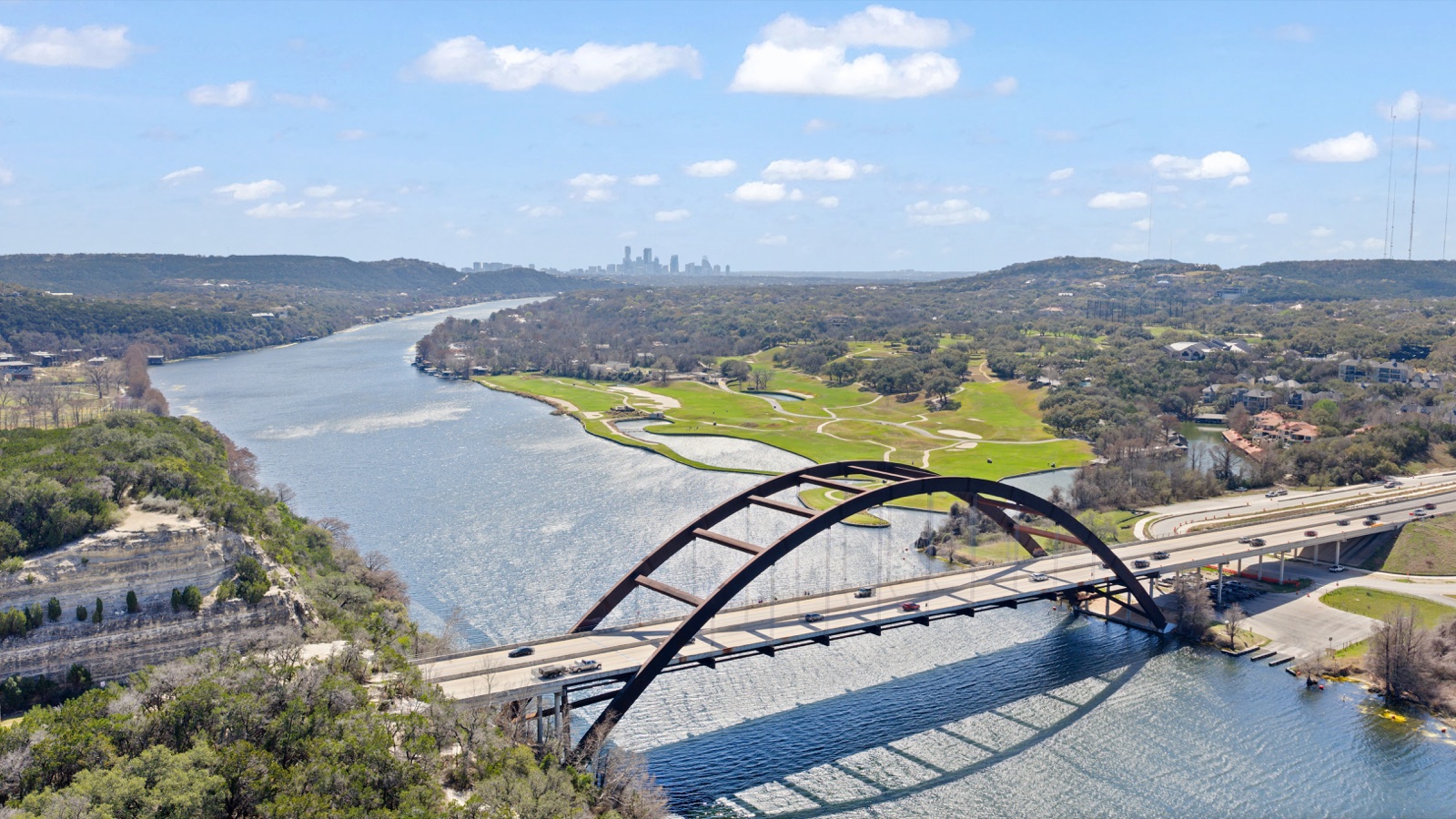
Pennybacker Bridge, the Texas Capitol, and the UMLAUF Sculpture Garden offer three different ways to photograph Austin’s built environment: structure within a landscape, the geometry of a civic building, and the relationship between art and outdoor space. Choose the place that suits the photograph you want, then check the rules for the kind of visit you are planning.
A casual visit and an organized commercial shoot can have different access requirements. Make that distinction before setting a time with a client or bringing production equipment.
Pennybacker Bridge: give the structure a setting
The Loop 360 bridge is a steel arch spanning Lake Austin. Its broad curve makes an interesting subject, but the surrounding water, slopes, and vegetation help explain why the structure feels distinct to this location. Begin with a composition that connects the arch to the landscape, then look for a closer study of its repeating lines.
Avoid assuming that every familiar photograph identifies a public or suitable place to stand. Travis County’s Loop 360 park information describes the managed park below the bridge at its southern end; it is not an access guide to the cliff viewpoints seen in many photographs. Check current conditions and the suitability of the visit before relying on that location. Never plan a session around stopping on the roadway.
For a study exercise, compare one composition that emphasizes the whole setting with another that isolates the bridge’s geometry. The two images should answer different questions instead of repeating nearly the same view.
Texas Capitol: start with alignment
The Capitol rewards attention to symmetry, vertical lines, and the relationship between a building and its grounds. An exterior study might place the central axis precisely in the frame; a closer image could focus on a doorway, a repeating architectural element, or the change from sunlit stone to shadow.
Check the Capitol’s visitor hours and access information before leaving. The State Preservation Board’s visitor guidance allows photography except where otherwise noted, while its production policy separately governs production uses. Do not assume visitor access authorizes a commercial assignment. Follow security screening and instructions at the site.
When working in a busy public place, wait for a clear composition without obstructing circulation. If a desired angle depends on an area that is closed or restricted, change the frame rather than treating access as part of the photograph you are owed.
UMLAUF: connect form with the garden
UMLAUF is a useful study in how sculptural form sits within a landscape. Look at the background before deciding where to stand: a branch, bright patch of sky, or another object may compete with the shape you want to show. Try one view that explains the sculpture’s setting and another that studies form, texture, or the spaces around it.
UMLAUF’s photography guidance distinguishes personal garden photographs from reserved portrait sessions and commercial requests. Gallery rules can also depend on the exhibition. Check the policy for the actual session rather than assuming one permission covers every use.
Keep paths available to other visitors and use only permitted areas. A quieter, simpler composition usually begins with a more deliberate position, not a larger equipment footprint.
Turn a visit into a small, coherent series
Choose an establishing image, a relationship between forms, and a detail. Review whether each frame contributes something different. Keep verticals and edges intentional, and avoid editing away physical features simply because they make the composition harder.
For a wider range of parks, water, and street settings, use our Austin outdoor photography locations guide. For a commissioned building, share the audience and intended image uses when discussing photography services; documenting a property calls for a different brief from a personal location study.
View our photography portfolio for examples of how buildings and their settings can be presented together.
A practical way to begin
A few things to keep in mind.
Balance the span.
Let the surrounding landscape explain the structure.
Find the axis.
Symmetry can bring order to a busy civic setting.
Work with context.
Show sculpture and landscape together.
Selected portfolio
Architecture beyond the landmark.
Practice with any built space: look for line, scale, light, and context.
For an upcoming shoot, prepare the property, check current pricing, and confirm the project scope with us.
Your next project
Give a building its full context.
We photograph property, architecture, and the spaces people experience.